


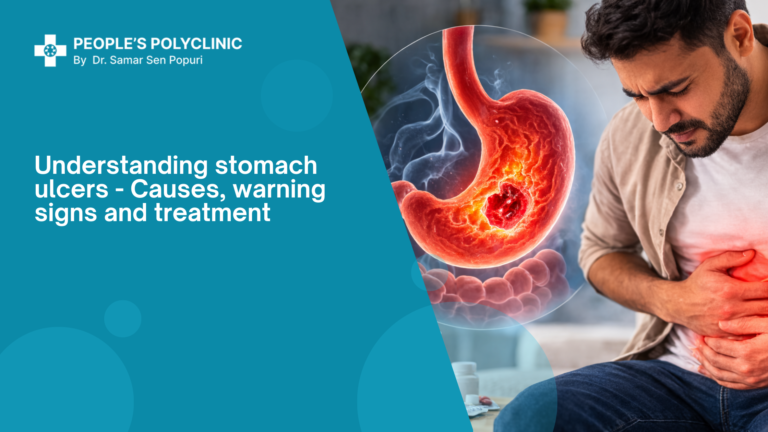
The stomach ache is a common experience that many people will experience in their lives. The stomach problems occasionally happen after consumption of spicy food or missing meals. When the pain is persistent and appears chronic and burning, then it may be a sign of a primary problem called stomach ulcers.
These ulcers are swellings which occur on the stomach wall. They occur because of failure of the protective mucus which covers the stomach. This failure exposes the stomach lining to the digestive acids. Although the ulcers of the stomach cause pain, they can be treated in case the condition is identified at the same early stages.
Most patients do not know the symptoms as they think that it is because of acidity and indigestion. But, one should understand the stomach ulcer symptoms and know when to consult a doctor to avoid any complications.
What is meant by a stomach ulcer?
Stomach ulcers or gastric ulcers are the conditions referred to as peptic ulcers. Such sores occur on the inner lining of the stomach because of being damaged by stomach acid.
The stomach itself normally defends itself by a thick layer of mucus. In case of a weak or damaged layer, acid may irritate the stomach lining and cause sores. These sores will also be painful over time and cause digestive problems.
The ulcers will develop slowly and in the majority of cases, the affected people may notice the ulcer until the pain becomes severe. The understanding of the symptoms will contribute to the need to find the required medical help in time.
Common causes of stomach ulcers
Knowledge of the causes of ulcers is useful in the prevention of ulcers. The stomach lining can be weakened and cause the condition due to several reasons.
Bacterial infection
A bacterial infection known as Helicobacter pylori is the most widespread factor that causes ulcers. The bacteria is found within the digestive tract. It can lead to the destruction of the protective lining in the stomach also in the long run. One can be infected with the bacteria without showing any signs of infection. The bacteria can however lead to irritation and development of ulcers.
Prolonged intake of analgesics.
Ulcers may be the result of frequent use of pain-relieving medication. Drugs like anti-inflammatory pain relievers could result in the stomach losing the capacity of protecting itself against acid. Both the regular use of these pain killers can lead to ulcers.
Excessive stomach acid
People can also possess larger stomach acid compared to other persons. An increased amount of stomach acid can lead to injury of the stomach protective lining. This can result in the emergence of ulcers.
Smoking and alcohol consumption.
Irritation of the stomach lining and slowing down of the healing of the ulcers may be caused by smoking and alcohol use. The overuse of alcohol and smoking is also responsible for the generation of more acid thus making the condition worse.
Stress and unhealthy diet.
Stress does not necessarily result directly in stomach ulcers. It can however worsen any existing digestive disorders.
Symptoms of ulcers in stomach
The symptoms of ulcers in the stomach should be known because this problem can be prevented through early treatment.
Burning pain in the abdomen
The initial sign of stomach ulcer is the burning of the abdomen. It can occur either in the course of meals or at night when the stomach is empty.
Bloating and indigestion
The majority of stomach ulcer patients experience bloating or a fullness on a small amount of food. They feel like some swelling inside the stomach.
Nausea or vomiting
It is possible that people who have ulcers in their stomachs experience nausea as the stomach lining might be irritated. There is even the possibility of vomiting.
Loss of appetite
Individuals who experience ulcers in the stomach might not want to eat because it can cause discomfort or pain to them.They can also feel that their stomach is full and they do not have to eat.
Unexpected weight loss
As individuals with ulcers within the stomach may not be comfortable feeding, they may lose their appetite. In turn, the loss of weight can occur suddenly.
If people experience these symptoms frequently, it is essential to visit a medical expert for proper evaluation.
How do doctors diagnose?
Doctors use various methods of verifying the presence of ulcers. The diagnosis of stomach ulcers starts with a detailed discussion of the symptoms and history of the patient.
Medical examination
The doctor might ask questions about the pattern of the pain and the patient’s eating habits. This will allow the doctor to get an idea of the cause of the condition.
Endoscopy
This is one of the most accurate ways of diagnosis. A thin tube with a camera is inserted through the mouth to view the stomach lining. This will allow the doctor to view the ulcers and the extent of the condition.
Laboratory tests
Tests might be conducted to check if the patient is suffering from any bacterial infections that cause stomach ulcers.
Ulcer treatment and medical care
In most cases, medicines are used as part of the treatment to ensure proper healing.
Acid suppressing medicines
These types of ulcer medicines reduce the production of acids in the stomach. This helps in faster healing of damaged tissues.
Antibiotic Therapy
If bacteria are the cause of the ulcer, antibiotics are used to cure the infection. These antibiotics must be definitely prescribed by the doctor.
Protective Medications
These types of medicine help in protecting the stomach lining from the damaging effects of the acid. The medications should be monitored for the side effects
Lifestyle Changes
Doctors may also advise patients suffering from ulcers to stop smoking, reduce alcohol consumption, and avoid stressful situations.
Diet for stomach ulcers
Dietary decisions are significant in controlling the symptoms and fostering recovery. Proper diet of stomach ulcers is protective to the stomach lining and it lessens irritation.
Foods to eat
Some do not upset the stomach and can be used to alleviate the pain.
- Bananas
- Oatmeal
- Yogurt with probiotics
- Boiled vegetables
- Lean proteins such as chicken or fish
These foods are easy to digest and help maintain digestive balance.
Foods to avoid
Some foods may irritate the stomach and worsen symptoms.
- Very spicy dishes
- Deep fried foods
- Excess coffee or caffeine
- Carbonated beverages
- Alcohol
Reducing these items can help prevent irritation and support recovery.
Eating habits support healing
Small changes will make a big difference. Eat smaller meals during the day instead of taking large meals. Avoid lying down after meals. Drinking enough water is also important for digestion.
Can ulcers be prevented?
Although prevention of all ulcers is not possible, there are habits that minimize the risk.
Eating small portions of food and consuming food at a schedule will help preserve the stomach lining. Limiting risk is also reduced by the unnecessary use of medication.
Exercise, relaxation exercises as well as getting enough sleep helps to manage stress thus aiding digestive health.
Health checkups are also important to be performed regularly, particularly among the people who have a history of digestive discomfort.
Possible complications if left untreated
Ignoring ulcer symptoms may lead to serious health problems.
1. Internal Bleeding
An untreated ulcer may begin to bleed, leading to weakness, fatigue, and anemia.
2. Perforation
In rare cases, the ulcer can create a hole in the stomach wall. This condition requires immediate medical attention.
3. Digestive Blockage
Swelling caused by ulcers may block food movement through the digestive tract.
These complications highlight the importance of early diagnosis and timely care.
When should you see a doctor?
Occasional stomach discomfort is common, but persistent symptoms should not be ignored.
Seek medical advice if you experience frequent abdominal pain, unexplained weight loss, vomiting, or black stools. Early diagnosis helps avoid complications and speeds up recovery.
Doctors can evaluate the condition properly and provide treatment that addresses the root cause.
How can People’s Poly Clinic help?
We at People Poly Clinic, the best general health care clinic in Hyderabad realize that there is a possibility of digestive issues that may influence the life and general comfort of people. Our highly qualified healthcare staff closely assesses the symptoms of respective patients and offers individual treatment plans to stomach disorders.
We are interested in determining what is causing the ulcer and prescribing the correct diagnosis, medication and lifestyle changes to the patient. Dr. SamerSen Popuri, the best stomach ulcer doctor in Manikonada will facilitate patients to get effective and safe care to help them heal and maintain long term digestive health.
We at People Poly Clinic believe that medical attention is critical and timely. We deal with stomach ulcers and restore digestive health in people with kind care and higher-order diagnostic aid, as well as one-on-one care.
FAQs
What are the symptoms of stomach ulcers at the onset?
The symptoms include stomach pain, bloating, stomach discomfort, and postprandial discomfort. These symptoms may be more frequent in cases where the stomach is empty.
Do stomach ulcers heal spontaneously?
Milder cases can be treated through lifestyle changes, though medical treatment is normally required in order to avoid complications.
Which foods may ulcer patients not eat?
Fried and spicy foods, caffeine, and alcohol may cause scratching of the stomach lining, leading to an increase in the symptoms of the ulcers.
What is the average time of treatment of ulcers?
With proper medication and a change of diet, most cases of ulcers would be healed in a couple of weeks.
What is the time one needs to see a doctor when he or she is experiencing stomach pain?
Severe cases of stomach pain involving vomiting or dark-colored stools should be attended to in case of stomach pain.